Reflections from CHEA 2026
Preserving Liberty

This past weekend, Practive Security took a mini road-trip and participated in the Christian Home Educators Association (CHEA) annual conference in Downey, California. I’d like to share with you some highlights and reflections as a result of this experience as well as other thoughts that have been brewing simultaneously in the context of parenting today and how the use of technology is once again front and center in the context of educating our children.
First a quick word about CHEA. You can read all about them at their website (https://www.cheaofca.org) and of the conference linked from their homepage. I would summarize CHEA as a major advocate for and enabler of homeschooling as a means of education and discipleship in the Christian home. This is a Christian community and is all about sharing resources and information to enable private homeschooling specifically in the state of California. Two of the major contributors to this event were the Home School Legal Defense Association (HSLDA) and also Family Protection Ministries. If you are a home educator, I strongly recommend supporting their work.
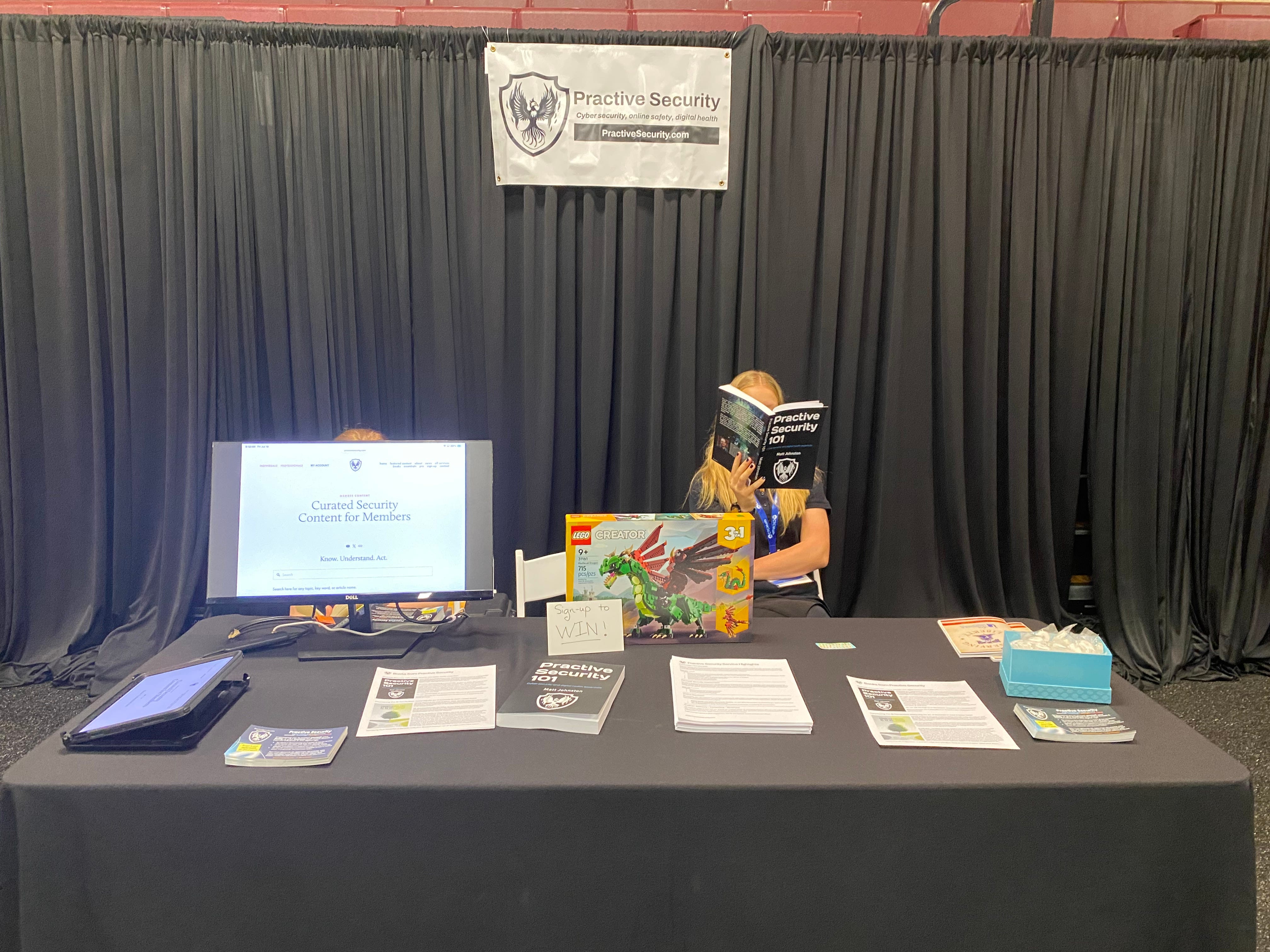
As a family and as a business, we contributed to the convention in multiple roles. We were honored to be counted among CHEA’s Warriors (significant contributors to the organization), I was invited as a Speaker, we attended as members, and we presented Practive Security in the exhibitor hall. That last activity was our primary mode of participation. Here’s a view of our table during a break in the activity:
Through all the conversations and activities of the long weekend, what stands out to me the most to me is the reminder that we are a large and strong community in California. There are many other families who share our worldview, our priorities, our convictions, and our form of life, and in that community exists a rich desire to learn from each other and to support each other.
Among our conversations was another notable standout: we are also a shrinking community in California. I understand that in past years this conference was much larger and drew greater attention. I think it is safe to say that everyone living in California today knows several people who have left the state in recent years as we have been experiencing a mass-exodus especially among Christians and Conservatives but also among those who have been squeezed out of the state financially. And so as our community dwindles it is good to be reminded that many are still here and we have a job to do which includes preserving our way of life in a world that is rapidly changing around us.
What also struck me was a combined sense of urgency and interest that parents expressed about what we are trying to do through Practive Security. A common sentiment we heard from people visiting our table was “wow, that is so important,” and also “this is so badly needed.” I think perhaps the most common topic of conversation was AI as people visiting our table wanted to talk to me about their use of AI, wondering if it was “ok,” and what I thought of their particular use case. Many people also assumed that we were a software company providing an Internet content filtering and website blocking service. As I explained what we are in contrast, I saw many eyes open wider and heads slowly nod in recognition and appreciation of the fact that there is much more work to be done than to install or enable content filtering on our kid’s devices, and then just walk away assuming they are safe and secure. More on that later.
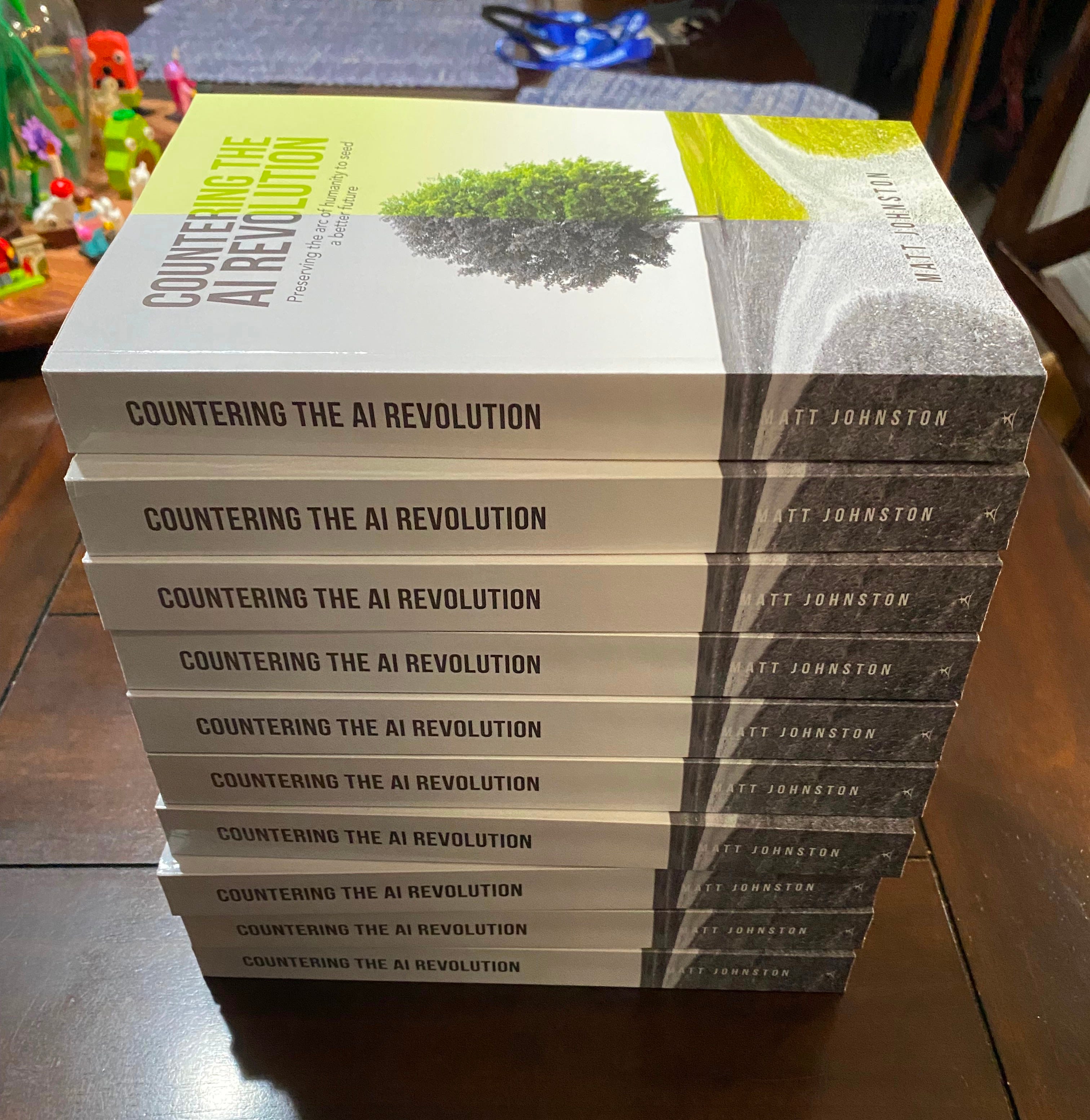
And of course while many people asked about our two books, we only had limited copies of Practive Security 101 to show while unknown to us our shipment of Countering the AI Revolution was waiting at home.
CHEA Hospitality
The entire event was organized and orchestrated with the highest quality and an equal part grace. I am truly impressed by the CHEA staff and deeply appreciative of their hospitality. I have attended and have presented at many major tech conferences including RSA, BlackHat, and others. The CHEA convention was the real-deal. It was nice to be able to share this sort of experience with my family, as they have never seen this side of my work before. But more than that, I was truly impressed and equally blessed by the CHEA staff. Thank you and job well done!
Digital Health and Cyber Security for Parents
CHEA invited me to present a workshop on the general topic of digital health and cyber security. It was an honor to do so. The workshop was well attended and the audience was very engaged. The audio recording of our digital health and cyber security seminar for parents is now available to purchase from CHEA here: https://cheaofca.org/product_description/297
You can download our workshop presentation slides using the link below. This presentation relied heavily on the displayed materials, so it would be best to view the presentation material while listening along.
https://www.practivesecurity.com/s/Final-DH-and-CS-Workshop-CHEA-26.pdf
This was a live session delivered to a group of parents and some children. We hit our time limit during QA and there were many hands raised still at the end, and so most of the post-workshop conversations happened in the hallways and exhibitor halls. Indeed this was a VERY compressed version of our larger Digital Health and Cyber Security Seminar for Parents available on our website.
Through the CHEA version of the workshop I present to you a snapshot of the widespread use of Internet connected tech and how our teens are participating in online activities, along with a summary of the measured negative affect this is having on our kids. Then I pivot to share insights about the nature and scope (and threat) that is generally pervasive on the Internet in my attempt to help the audience understand that the Internet itself is weaponized—it is dangerous in nature. Following that I review the common tech solutions offered to parents meant to counter this today and present my opinion as to why these are not enough. My recommendation to solve this problem is to adopt a different posture in our homes and to take up the role of being shepherds that I believe all parents are called to. As a tool in this effort, I offer several strategies including the integration of a Media Ecology course or intentional discipleship in the home.
I offered several books to help guide families through deeper exploration of the dangers, while examining their own core values and making sure their use of technology never undermine or overrides who they want to be and how they want to live, from a first principles point of view.
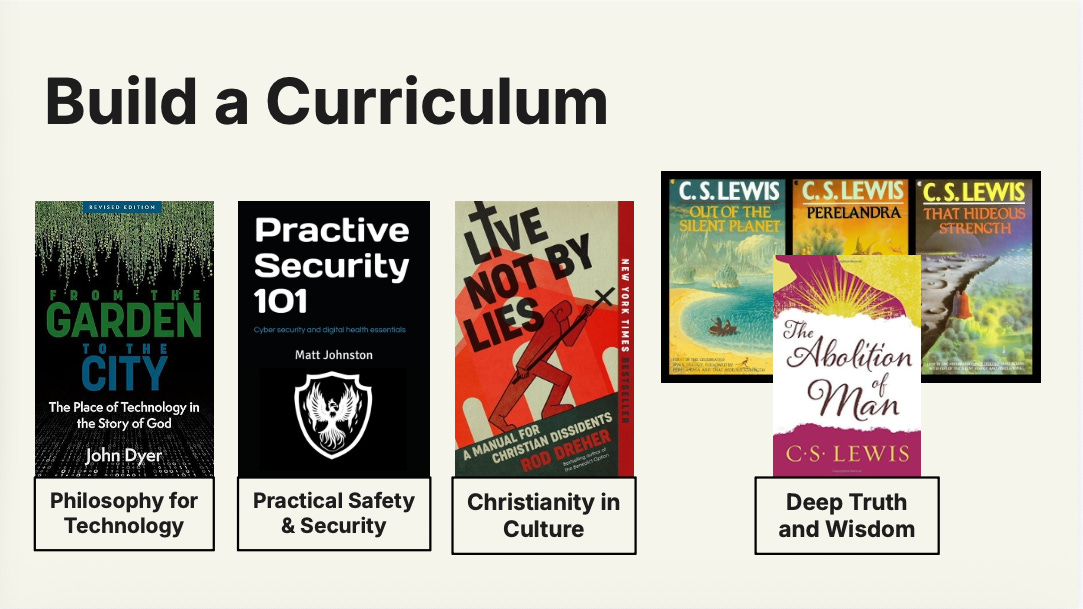
Speaking of books, walking through the exhibitor hall I saw several curriculum and focused education resources that included Live Not By Lies by Rod Dreher and That Hideous Strength by C.S. Lewis. I am very glad to see these works counted among important ones to prioritize in the education and formation of our children. These two are incredibly important works for our time.
As a side note, we are also available to present workshops like this for your community, family, business, church, school etc. You can reach us via the Contact page to begin planning an engagement today.
AI in Homeschooling
Another common theme in our larger cultural conversation today was also present at the CHEA convention: what do we do with AI in the home?
While I briefly touched on this in my workshop, there was another workshop presented that attempts to answer that question by offering that AI can be harnessed as a helpful aid in the home as parents attempt to optimize education. This is something I also address briefly in my book Countering the AI Revolution. In the chapter titled “AI is Never Just a Tool,” I mention a point of view often conveyed by Christian author and home educator Neil Shenvi, who advocates strongly for using AI as a teaching aid in the home, largely to fill skills gaps among parents or to provide efficiency gains that help kids learn faster so parents can address more. I use his pragmatism to pivot into a larger and deeper analysis based heavily on the values hierarchy presented in John Dyer’s book From the Garden to the City. By the way, Shenvi’s book, Critical Dilemma, is a very important work worth reading, but I do strongly believe the pragmatic view of AI (and all technology) is dangerously shallow.
I had an extended conversation with the Speaker at CHEA who was advocating for the use of AI in home education. In that conversation it became apparent to me that I do not think he had considered most of my point of view before. He seemed to mostly regarded AI as a new and interesting tool and that he hoped to help people learn how to use it in practical ways. He was not thinking about it in metaphysical, philosophical, nor theological terms and certainly not as a movement of historic change in the story of mankind. This, again, is why I wrote my book and why I chose the title I did.
But something else keeps coming up in conversations I have with fellow parents about AI in the home, and that is that many parents intuitively discern that they should not be using it or should intentionally limit their use of AI. But they often tell me that it is very hard to find people who support that discernment and instead seem to mostly find people advocating for AI in nearly every aspect of life. This was also something the editorial lead at WestBow Press shared with me. She explained that at WestBow Press (a division of Zondervan) they regularly receive manuscripts from authors that tell a pro-AI story and that mine was the first she had seen that confirmed her intuition and then provided a deeper basis to explain it and justify her concerns.
As a different approach to this entirely, Joshua Herring (author of Sons of Adam, Daughters of Eve) has launched the Logres Institute which is geared toward empowering parents and teachers to teach in a Classical Education style. Rather than turning to AI to close the skills gap felt by parents in their attempts at home education, Josh and his team are providing a means for parents and teachers to develop more deeply themselves so they can pass that along to their children and students.
I am still collecting my thoughts on how to best engage this debate overall, but yesterday Josh Herring facilitated a live dialog among several fellow classical educators, including homeschoolers and the head of a private Christian school, in direct response to a movement of building educational programs around AI. I strongly recommend you listen to this dialog once it is available on YouTube, as it explores deeper themes and draws important considerations to the surface. Here’s a link to Josh’s channel. Check back in a few days to find when it is posted, but it is titled: Classical Education Responds to The Alpha School. https://www.youtube.com/@theoptimisticcurmudgeon89
Josh has previously hosted conversations and mini-debates on the topic of AI in education, including this one (which I respond to directly in my book):
Alas, as I explore these questions and deeper topics, I keep coming back to the questions, “what is the purpose of education and why do we homeschool,” and “why would I even want to use AI in my home?” All the reasons people advocate for use of AI, to me, fall short of facilitating the deeper reasons my wife and I homeschool and disciple our children the way we do. But again, I encourage you to listen to the dialog and work to the conclusions that support your core values. It is very important to consider where this revolution came from, where it is leading us, and as Jonathan Pageau said recently at the Arc conference, “who does this serve?” All of this I explore in Countering the AI Revolution, but I think it is critically important to maintain the mindset that Rod Dreher offers us in Live Not by Lies—we are dissidents in a fallen land living behind a silicon curtain that separates us from the essence of humanity.
But I have also attempted to answer the specific question “how do we prepare our kids for the AI world” in the article linked below, which is also covered in Countering the AI Revolution. This might help draw out some things to consider if you are pondering this question yourself:

AI use in the home and in education is certainly a story that will continue, but I would like to address one final aspect of the debate. I hear some parents attempt to justify use of AI in home education because they feel an urgency to not be led by fear and they hear from those opposed to AI a message of “you should be afraid of this.” The heart of their pro-use argument is something like, “we should not be driven by fear and we serve a sovereign God, so we should be able to set those fears aside and use AI as a tool for whatever good we can draw from it.” This is an argument I have written a lot about and I do touch on it in my workshop mentioned above. It is the classic pragmatic point of view. But rather than getting into that in this article, I offer this for consideration:
“A prudent person foresees danger and takes precautions. The simpleton goes blindly and suffers the consequences.” Proverbs 22:3 NLT.
Remember the wisdom of Tolkien: the tool itself will produce a transformative effect on whomever bears it. It was made intentionally to produce certain outcomes within and through whomever uses it, and that transformation will happen regardless of your will to contain it and that will influence whatever you produce with it.
I believe it is simply wise and right for us as parents to examine this subject fully and to weigh the benefits and deficits in the micro and macro levels and to determine how to best shepherd our kids in this digital age. I believe protection is an equally important part of our role as that of provision, and that both of those should be handled along with the other core characteristics of the shepherd as our role model: provide, protect, teach, participate, lead, and preserve. I do not see fear as a leading factor in my consideration of AI, but rather a prudent attention to the harm that I see and a desire to protect those I am shepherding from that.
But also remember that fear is a positive motivating factor in life: it often keeps us alive. Should you fear the consequences of heavy drug use? Yes. Should you stay at home forever out of fear you might catch or spread a common sickness spread in public? No. We should be discerning and prudent in all things.
Assessing Your Use of Technology and AI
Many of the conversation I had at CHEA centered around questions of whether or not a given use of technology was safe or unsafe. I answered questions about VPN, Alexa (voice operated tech in the home), screen time, content filtering, and of course specific uses of AI among others.
Empowering you to assess and answer these sorts of questions is exactly why Practive Security exists. I want to use my experience to help you understand the risks and concerns of the use of any tech as it relates to the totality of who you are so you can determine how to best integrate technology into your life while managing the risks and potential harm that can come from that. But I was also surprised by the many ways people have already adopted AI into their life into a new form of dependency.
One person shared how they use it for researching counter points of views that they can prepare to debate through Christian and cultural apologetics. Another spoke of how they use AI to assess their meal choices (foods and portions) to manage their health condition. Someone shared that they use AI to make their communications with customers appear more professional. Someone else mentioned use of AI to help them plan manage their calendar. Another software developer at a big tech company shared that his work has gone from writing code to talking to Claude all day. He seemed to shrug this off as both problematic but “what else do you do?” Swapping AI uses was all around but often accompanied by a sense of guilt or embarrassment. One person told me that his use of AI was justified because he said, “I can’t do that without AI, because I don’t know how to.” But many also seemed to come to me almost asking for my permission to continue doing what they seemed to discern was maybe not good for them.
This is exactly why I wrote Countering the AI Revolution and Practive Security 101. I’m sorry to keep beating that drum but I really did write to help us explore these questions through ways that I think many people are overlooking.
The Problem Seems Too Big
But I also understand the sentiment I often hear from people I talk to about online threats—that this problem seems simultaneously too big to ignore and also too big to do anything about it. There is a sense that danger is imminent, but our world and lives are so interdependent on the use of technology it can seem like those threats are simply unavoidable. I also often hear a sentiment that assumes bad things are always imminent and we can take them as they come rather than trying to counter them before they happen, because trying to solve everything is an impossibility anyway.
As a parent and fellow human being living in this digital age, I completely sympathize with both points of view. We don’t need to live in fear, but Proverbs 22:3 tells us that we do need to manage the risk of harm: “A prudent person foresees danger and takes precautions. The simpleton goes blindly and suffers the consequences.” NLT
The threats we face online are very real and they are a very big problem, but they are not beyond our ability to manage, and you don’t need to simply unplug everything to protect yourself or your family to stay safe. Being prudent and protecting what matters the most in life is not living in fear but is rather simply the wise thing to do. You can do this.
And I do not think you can simply wait and manage the fallout of whatever may come. I have heard and witnessed far too many horror stories that happened to well-intentioned and faithful Christians, who later lamented that “if I had only known,” or “if someone had only warned me ahead of time.”
That’s why we are putting our efforts into Practive Security. We are here to help by providing Practical and Effective strategies and practices you can use every day. But as I covered in the workshop, you will need to think deeply about the formation of your family, your core values, and your first principles. You will need to shepherd your family with intentionality and diligence.
I would encourage you to start small. This article title, “The Foundations of Online Safety and Security,” is an overview written to help you see what you can do and how to get started. With our Essentials Membership on our website, you can access articles on topics that are of highest importance to you and take simple steps to address those. You can also take our Practive Security 101 book one chapter at a time. You can also use our Self Assessment tool as a checklist and guide. Choose a few strategies and put them into practice. Make a few changes at a time and build as you go. You can do this and if you get stuck or have questions along the way, we are here to help. All of those resources are available through our website at https://www.practivesecurity.com/
In Closing
It was a great honor to participate in the CHEA convention this year, and I sincerely hope and pray that the contributions from my family and I were an encouragement and aid to fellow homeschooling parents. It was great to see so many likeminded parents and families together in one place to support each other and to learn from one another. I would love to return again next year.
If you would like Practive Security to participate in your event, please contact us via our website and we can make arrangements.